Don Fernando
Vintage Classics, Paperback, 2000.
12mo. vii+178
pp. Author's Note, 1950 [v-vii].
First
published by Heinemann, 1935.
Revised
version with new Author's Note first
published, 1950.
==============================================================
Somerset
Maugham loved Spain England Spain
The Spanish
impact on Maugham’s fiction has not been so strong, but nor is it negligible. Catalina (1948), his last novel and last
work of fiction, is set in Spain
It’s only too
natural, then, especially given my own prejudices against Spain Spain
Presently
I was qualified. I had already published a novel and it had had an unexpected
success. I thought my fortune was made, and, abandoning medicine to become a
writer, I went to Spain Seville Seville
This was not
the first time when Maugham was intoxicated by the carefree life of a foreign
country. While still a medical student, he visited Capri, “the most enchanting
spot”[4]
he had ever seen; some four decades later, he set one of his finest stories,
“The Lotus Eater”[5], on this gaunt rock
covered with smiling vineyards and lemon groves. Still earlier, when he was not
even a medical student yet, Willie spent more than a year in Heidelberg[6],
a period of crucial importance for his intellectual development as he listened
to the lectures of Kuno Fischer and was introduced to Schopenhauer, not to
mention a great deal of other literature. But there was one critical difference
between these visits to Germany
or Italy and Maugham’s first
travel to Spain Seville
There are, of
course, other attractions that Spain
I
was but twenty-three when I went to Seville London Spain
In 1905
Maugham could still write a travel book largely dedicated to sightseeing,
brimming with detailed descriptions of monuments and countryside. Thirty years
later this was no longer possible. He was not indifferent to the spacious and
hilly planes of Spain
They
were proud, punctilious and elaborately courteous, passionate, brutal and
ruthless, fiercely religious, but fond of a joke, especially a bawdy or a cruel
one; and when their passions were not roused, gracious, charitable and kindly.
I do not believe the Spaniards have greatly changed. Essentially they are the
same people as they were then.[10]
If the last
sentence is true, is there a better reason for studying history? And how could
a writer, who was absorbed in the complexity of human nature all his life,
resist the temptation to explore such incandescent and improbable creature as
the Spaniard? Little by little, I am starting to comprehend Maugham’s boundless
admiration, mingled with humour of course, for the Spanish people and the Siglo de Oro they still cherish. Don Fernando has helped a lot in this
respect. That is why, notwithstanding its defects, it is an indispensable read
for the student of Maugham.
The book is a
curious mixture of reflections on many subjects and memories from many travels,
quotations from historical sources and descriptions of modern Spain
The first
part introduces you to the man who gave the book its title. Don Fernando was a
tavern owner and a shady dealer of curiosities from Seville
whom Maugham met during his first visit to Spain
Since Spain
The most famous
part of this book, by far, is the speculation that El Greco might have been
homosexual. It is more intriguing and potentially more personal than the only
other explicit reference to this “abnormality” in Maugham’s works (about
Melville in Ten Novels and Their Authors,
1954). Let’s have a look at it. The whole passage but with minor omissions is
the following:
Not
long ago I came across the suggestion, made in a ribald spirit, that El Greco
was homosexual. I have thought it worth considering. So far as an artist’s work
is concerned there is as a rule little interest in knowing about his sexual
life, upon which an exaggerated stress is generally laid. There is a notion
that men who have in any way greatly distinguished themselves should in this
respect be different than their fellows, and when the student discovers that
they have had love affairs he is apt to think the fact strangely significant.
For all the to-do that has been made over the amours of Shelley and Byron I
cannot but doubt whether they were very different from those of other young men
of their class. Many a smart young broker in the City of London
When
you survey possibilities it must be admitted that there is in this one a good
deal that saves it from being wildly improbable. […] I should say that a
distinctive trait of the homosexual is a lack of deep seriousness over certain
things that normal men take seriously. This ranges from an inane flippancy to a
sardonic humour. He has a wilfulness that attaches importance to things that
most men find trivial and on the other hand regards cynically the subjects
which the common opinion of mankind has held essential to its spiritual
welfare. He has a lively sense of beauty, but is apt to see beauty especially
in decoration. He loves luxury and attaches peculiar value to elegance. He is
emotional, but fantastic. He is vain, loquacious, witty and theatrical. With
his keen insight and quick sensibility he can pierce the depths, but in his
inane frivolity he fetches up from them not a priceless jewel but a tinsel
ornament. He has small power of invention, but a wonderful gift for delightful
embroidery. He has vitality, brilliance, but seldom strength. He stands on the
bank, aloof and ironical, and watches the river of life flow on. He is
persuaded that opinion is no more than prejudice. In short he has many of the
characteristics that surprise us in El Greco. It may be that in this abnormality
lies the explanation why his pictures fail of that ultimate greatness which is
release. They thrill; they do not give you peace. They excite; but they do not
satisfy.[12]
Arresting speculation.
But it will not stand careful scrutiny. Most of Maugham’s arguments I find
perplexing rather than convincing.
To begin
with, I think he is quite carried away with sweeping generalisations. Surely,
not all homosexuals, not even all artists with homosexual orientation, are
“vain, loquacious, witty and theatrical”, are they? Neither do I see how we can
link homosexuality, even in those bygone times when it was a source of social
alienation or even considered a criminal offence, with “lack of deep
seriousness”, with that “wilfulness” which breeds cynical attitude to common
human values, with love for luxury and elegance, or with “small power of
invention”, “wonderful gift for delightful embroidery”, “lively sense of
beauty” and “inane frivolity”. All these things, it seems to me, may depend on
so much other, and more important, factors (e.g. hereditary and environmental,
which indeed determine everything, including the sexuality itself).
The argument
that some of the “natural responses of the species are denied” to the
homosexual is obviously true. But is it so important? I don’t think it is.
Family and fatherhood, at least in their conventional incarnations, may be
beyond his reach, but neither of them prevents him from making a success out of
his life. Indeed, the opposite may be argued: the absence of family ties may be
beneficial for the self-realisation in other fields. This is especially true in
the arts where, as a rule, the greatest geniuses have seldom been exemplary
family men. Besides, the homosexual is not to be despised as an observer of
heterosexual relationships. Being an outsider not intimately concerned with the
matter, he can observe more dispassionately than either party in any “normal”
couple. Guess which writer did this compulsively and with rare insight during
the 50-odd years of his career.
And what of
this cryptic reference to “perplexing sonnets”?[13]
Whose are these? Shakespeare’s? Michelangelo’s? Are they the only proof that
the homosexual could reach the “the supreme heights of genius”? Ironically
enough, Maugham himself is the perfect example that invalidates his own point. Genius,
to my mind, is making the best of such gifts as you are endowed with. This
Maugham certainly did in at least two arts: the art of writing and the art of
life. It doesn’t disturb me that the majority of readers, not to mention
virtually all professors of literature and professional literary critics, would
disagree with my putting Maugham in the first row of the first rank, let alone
calling him a genius. But to me this seems as plain as the opposite does to the
highbrows. If you insist on defining genius as Maugham does in this essay, as
“talent with a greater capacity and a universal sympathy” (talent being an
“individual way of seeing the world combined with a natural aptitude for
creation”[14]), he fits the criteria
even better.
The whole
discussion of El Greco’s homosexuality sounds like Maugham’s lamenting his own
failure to reach the Olympian heights of creation. This is possibly his only
bout of self-flagellation in print. It is notoriously well-known that he expressed
something like agreement with the critics who labelled him “second-rate”; he
once said he painted easel pictures, not frescoes (as if an easel picture couldn’t
be a masterpiece), and it’s fairly sure that he considered his works closer to
“tinsel ornaments” than to “priceless jewels”. Did he think that his
homosexuality really was a terrible limitation, the major one that marred his
writing? He may have. In some of the most candid passages of The Summing Up, Maugham considered his
innate aloofness – “I
have been jealous of my independence. I am incapable of complete surrender.” –
and his “small power of imagination” to be the chief reasons why his work could never achieve
“the intimacy, the broad human touch and the animal serenity which the greatest
writers alone can give.”[15]
Maybe he really meant his homosexuality. Maybe he didn’t.
I hardly need
to add that I think he didn’t. To my mind, it was Maugham’s ironic detachment –
and he well knew it – that could have
limited his self-realisation. Of course it didn’t. Like all great artists,
Maugham managed to transform his greatest limitations into some of his greatest
strengths. Whether he knew that I am
not sure, but I surmise he was dimly aware of it. Don Fernando was first published just a few years before The Summing Up, and there are some
noticeable repetitions between both works, sometimes in similar words. The
later book being spiritually more personal but carnally less explicit, it is
possible that Maugham may have used El Greco’s putative homosexuality to set
his personal record straight. If he did, as seems probable to me, it was a
mistake that mars an otherwise delightful essay. By 1950, when the revised
version was first published, it was too late to omit the passage. Imagine the
pandemonium if he had!
Whether
homosexuality is regarded as “abnormality” is a matter of personal opinion. Personally,
I don’t think it is more abnormal than watching most TV programs, especially
the ones fond of reality shows and commercials, or spending countless hours
online in forums and chats. Homosexuality is just another form of human
communication. It is different and less popular than the more conventional
heterosexual alternative, but neither strikes me as a valid argument against
its existence. If it is capable of creating and sustaining a harmonious and
productive relationship – and we all know it is – then I think it definitely
has its place in society. It is strange that Maugham should have used a word
like “abnormality”. Thrice!
It should be
mentioned that Maugham at least never stoops so low as to search for El Greco’s
homosexuality in the male nudes on his canvases. No less a master than
Michelangelo Buonarroti has been victim of such stupendous superficiality. So
has Maugham, for that matter, as perceptive critics and even more perceptive biographers
have gone out of their way to show how the huge impact of Maugham’s
homosexuality on his works is confirmed by descriptions of male beauty in his
novels and short stories. Enough about that.
Leaving aside
the entirely unimportant matter of homosexuality and his unconvincing treatment
of it, Maugham’s discourse on El Greco is fascinating. Only towards the end of
the essay, having tried nearly everything else, does he resort to the
“abnormality” as a putative explanation of the “tortured fantasy and sinister
strangeness” that are on display in so many of El Greco’s paintings. Maugham is
careful to point out that everything he says about “The Greek” can be no more
than surmise, as very few original documents have survived, but he has a well-argued
case about everything from El Greco’s biography and character to the colours
and the composition in his pictures. Several points of personal interest may be
noted.
Maugham’s character
sketch is compelling. He would have no truck with idealistic fantasies about El
Greco as the epitome of fervent Catholicism, the most potent weapon of the Counter-reformation,
an austere spirit indifferent to anything material. Not even close, if you ask
Maugham. Analysis of the two self-portraits he presumably drew in two of his
most famous pictures, The Burial of Count
Orgaz and The Martyrdom of St Maurice,
yields rather surprising, but not unconvincing, results:
You
would have said from the look of him that this was a composed, intelligently
curious man, but one capable neither of great passion nor of deep emotion. In
neither of these pictures is there in the expression any of the seriousness
which one would have thought the occasion demanded. This person seems to
preserve a strangely ironic detachment; it would never occur to you that he was
a mystic; you might have taken him for a sardonic humorist.[16]
Further
investigation of the little we know, or think we know, about El Greco shows
that he probably was addicted to luxury, grandiloquent in his speech, and
magnificently arrogant. More controversially, Maugham suggests that in his
numerous portraits of Spanish noblemen, so distinguished and decorous yet so
devoid of personality and character, El Greco had a lot of subtle fun at the
expense of his sitters:
It
looks as though El Greco regarded his sitters with a singular detachment. Is it
possible that this mystic took no interest in the human soul? Though infinitely
well-born these people look terribly stupid. They were. The history of Spain
I suppose
“the abysmal ineptitude of which the human race is capable” is as good a reason
as any for Maugham’s lifelong fascination with Spain
Maugham was
intensely interested in the mystics from the Golden Age and, as evident from
this book, knew a great deal about them. He memorably defines mysticism as
“that state that renders you conscious of depths of truth unknown to the
intellect, revealing like “glimpses of forgotten dreams” a greater significance
in life and union with some larger reality”[18],
and he is convinced that El Greco was a mystic, though not a religious one. For
Maugham was of the opinion that this illusory communion with what for want of a
better word is called “God” can be achieved through various ways, for example
“from a glass of cold beer, from the sight of a well-remembered scene, from
opium, from love, by prayer and fasting and mortification of the flesh, and if
you are an artist in the excitement of the creation.“[19]
The mystics of Spain
To question
the sincerity of El Greco’s faith is a formidable challenge. Virtually all of
his pictures are religious, and he lived in times (at the turn of the 17th
century) and places (Italy
and Spain
You don’t
have to agree with Maugham’s fanciful, to say the least, equalling of
homosexuality and frivolity in order to appreciate the latter in El Greco’s
paintings. In a nutshell, Willie suggests that the Cretan used the human body
mostly as a decorative element; hence his famous elongated figures with small
heads. Above all, Maugham is outraged by El Greco’s constant depiction of extremely
beautiful but utterly inappropriate to the situation hand gestures. Two of the
most telling examples are The Martyrdom
of St Maurice, than which “never did El Greco more obviously paint gestures
for their beauty rather than for their significance”, and Christ Carrying the Cross in which it is “disconcerting […] to see
the elegance with which the Saviour clasps it”. Look at both pictures and see
for yourself, but I think both points are well worth some thoughts. The same is
true for the sardonic humour: typical of the homosexual or not, it is strongly
suggested by some of El Greco’s monstrous distortions.
I
cannot but ask myself why El Greco, who could draw so beautifully when he
wanted to, should, apart from his deliberate distortions, at times have drawn
so carelessly. Why does he put a Virgin’s eye half way down her face or make it
pop out of her head as though, poor thing, she had exophthalmic goitre? Why does
he sometimes give his saints the look of ducks dying of fright in a
thunderstorm? The Virgin in the Crucifixion
in the Prado is grotesque; that face would not be out of keeping in a satiric
painting by Goya.[20]
Similar
reflections lead Maugham to declare El Greco “the greatest of baroque painters”
and launch a long digression on this curious style that is supposed to have
carried the art of decoration to its greatest heights. I guess most art
historians would sharply disagree that “El Greco was aiming at this and nothing
else”, and it may be that Maugham was unduly influenced by his far-fetched
homosexual speculations, but his hypothesis actually explains both El Greco’s
development towards more abstract compositions later in his life and his
indubitable influence over Modernism. Never satisfied with mere walking on
well-trodden grounds, Maugham goes further and suggests a rather startling
parallel between the 16th and the 20th century. I think
it is stimulating:
It
is not strange that the moderns should set such great store by El Greco. If he
were alive to-day I imagine he would paint pictures as abstract as the later
work of Bracque, Picasso and Fernand Léger. And it may be that the interest in
formal design of the present day is due to the same causes as produced baroque
art in the sixteenth century. Now too we are spiritually at sixes and sevens.
Afraid of the sublime, we take refuge in the multiplication table.[21]
Maugham is a skilful
polemicist. Even his most speculative notions are, first, recognised as such,
and second, supported by some evidence, however subjective. He may be
opinionated and provocative, but he is never dogmatic: he never asserts anything
only because he feels like it. He suggests, for instance, that El Greco might
possibly have left Italy because of some brawl, but he hastens to add that this
was hardly uncommon at times when swords were drawn on the smallest and most
trivial of provocations; murder, trial and banishment followed shortly. He is
convinced that, contrary to the popular opinion then, El Greco acquired his
unique colour palette (about which Maugham deliriously rave, a rare thing about
him indeed) before he ever set foot in Spain. I so far fail to see the
parallels with Tintoretto, who’s also supposed to have influenced the notorious
“elongated figures”, but that may be due to my ignorance of Venetian painting
from the second half of the 16th century.
A comparison
between El Greco and Velazquez, the finest Spanish master from the next
century, is the obvious thing to do. After all, these are the two most famous
Spanish painters in pre-Goya times. It doesn’t sound very promising, but Maugham pulls it off very effectively.
Using only their pictures and inviting us to wander through the halls of the
Prado, he creates a dramatic juxtaposition that’s almost operatic in its
emotive power.
So Velazquez was a man of “an
equable, sunny temperament” and “the greatest of court-painters”. Yes, it is
true that he is “somewhat superficial, but he is superficial on the grand
scale”, and he had a “genial heartlessness” when he painted his dwarfs and
fools blissfully unaware of the wretched “misery of their lot”. Nobody, of
course, can deny his “miraculous skill in painting”, but the more one looks the
more one asks oneself whether all this glorious talent is really worth it. “It
reminds you of a writer who says things with exquisite sobriety, but says
nothing of any great consequence.” Velazquez created beauty, and beauty was a
full stop for Maugham. You stand, you gaze, you admire – and then you start a
new sentence.
On the other
hand, El Greco was a man of “uncertain humour perplexed by fantastic longings”,
a man tormented by pain who strived to express something, some bizarre anxiety,
that is “hovering just below consciousness that it exasperated him to be unable
to recall.” He may well have been an extravagant Levantine who laughed up his
sleeve at the Spaniards and their bombastic estimation of themselves. It is
difficult to believe that he regarded the holy Catholic faith with anything
more than sardonic amusement, constantly making fun of it that was too subtle
for the obtuse Spanish aristocracy, however strongly they may have suspected it
subconsciously – as Philip II no doubt did. But there can be no doubt, either,
that El Greco was a mystic. If mysticism may, rather broadly, be defined as the
quest to understand ourselves and our place in the universe, the Cretan fits to
perfection, together with his vast and anything but ordinary art. This is not a
full stop. You stand, you shiver, you are disturbed – and it stays with you
long after you have left the Prado.
In spite of
the homosexual hitch, the essay on El Greco is among the finest and most
stimulating pieces in the book. Not much else is on that level. Indeed, the
best single-word description of the whole volume would be “uneven”. Several
caveats may be kept in mind.
The “chapter”
on Spanish food is painfully dull. This is strange. Maugham always was a
connoisseur of food and one would expect him to write a lively account of the
Spanish cuisine. For some reason it didn’t come off. Most of the piece consists
of greatly obsolete advice where in Spain
Several other
chapters contain material that I cannot but regard as superfluous and awkwardly
inserted. This is a grave error of construction that I didn’t expect from the
mature Maugham (he was 61 when the book was first published). The concluding
pages, for instance, are marred by an excessive detail about the epic
pilgrimage of an Armenian bishop who in the end of the 15th century
travelled from his homeland to Spain
When the girl stripped the young man was taken aback to see
that she was still a child.
‘You look very young to be in a place like this,’ he said.
‘How old are you?’
‘Thirteen.’
‘What made you come here?’
‘Hambre,’ she
answered. ‘Hunger.’[23]
Poignant
story, to say the least, which has its place in the book. But this is the wrong
place. Within the context it aims, apparently, to inform us that some Spanish
girls did have green eyes, so the old writers didn’t invent them, nor did they
mean something else. Hardly the most important insight into the Spanish
literature! It’s much more fascinating to speculate whether the story was based
on Maugham’s own experience; the fact that it’s told in the third person is of
course no hindrance for that. It does sound familiar – it’s not an easy story
to forget, is it? – but I’m not sure whether I read it before in this very book
or somewhere else in Maugham’s oeuvre related in the first person singular.
Many passages
are, if not unnecessary, at all events unnecessarily expanded. The narrative in
part two of St Ignatius’ early life is tedious: descriptive and dry, entirely
devoid of the subtle wit so characteristic of Maugham. The next part suffers
from too extensive quotations from Spiritual
Exercises, the saint’s literary tour
de force, and from some notes of one modern editor who was inordinately
fond of gory descriptions of the eternal punishment that sinners are bound to
experience in Hell. The pages dedicated to the picaresque novel and the drama
also contain too many quotes and too detailed plot descriptions. In later
years, this will be the case with some of Maugham’s other essays, too.
But there is
something to be said in defence of Maugham’s somewhat unrestrained propensity
for plot retelling. One must understand that it was essential, for very few
readers, I imagine, had any idea of, let alone read, novels like Lazarillo de Tormes and Vida de Marcos de Obregon or plays like La Estrella de Sevilla or La Devocion de la Cruz. And in those ancient
times there was no World Wide Web where you can google everything and then
entertain the slightly outrageous notion that you know everything about it.
Besides, these pages are nothing like the acute boredom that marks the apprentice
years of St Ignatius. They make for a lively and illuminating read. A novelist
and a dramatist himself, Maugham was well-equipped to appreciate how revealing
of their age novels and plays may be, but also what limitations and pitfalls
the curious historian should be aware of. Occasionally, he does include general
reflections that are, to my mind, very much thought-provoking, and indeed worth
quoting:
It
would be absurd to suppose that one could acquire from the picaresque novels
more than a partial knowledge of the behaviour, the ways of thought and the
sensibility of the Spanish in the Golden Age. They present but one side from
the picture. For another you must go to the drama, which at no time and in no
country has flourished so luxuriantly as in Spain
But
if the drama presents an adequate picture of the way men think and feel,
contrariwise it influences their thoughts and feelings. It gives voice to the
inclinations that they have repressed and by the vividness of its appeal
enables them to carry into action the promptings of their hearts. The
contagiousness of the emotions it arouses, the man-to-man address, give it a
power incomparably greater than that of fiction. Far more wives left their
husbands because Nora slammed the door in Torvald Helmer’s face than ever men
shot themselves because Werther suffered from the melancholia of the age. Though
it must be admitted that suicide is a drastic and often painful affair. The
dramatist not only represents the persons of his period, but by giving to their
instinctive tendencies living shapes forms them after the pattern he has
devised. So Mr. Coward not only portrayed the querulous frivolity of the decade
that followed the Great War, but created a generation of querulously frivolous
people. It is owing to this power that the playwright wields, that the church
has always, and it may be with wisdom, looked upon drama askance.[24]
Aficionados
of Maugham’s short stories will certainly recall “The Point of Honour”[25],
as cruel and chilling as its title is hackneyed, and would like to know if such
perverse ideas of honour really existed in Spain
It is not
hard to see why Maugham was rather taken with Lope de Vega and Calderon de la Barca, by common consent the two greatest playwrights of the Golden Age. Both
were professional writers par excellence
and both were extremely productive. To this day it is a matter of debate how
many plays each of them wrote, but the quantity is measured at least with triple figures; Maugham read but a dozen
of Calderon’s and two dozens of Lope’s, but who can boast a better achievement
today? He is particularly attracted, as you would expect from a novelist, by
the singular personalities of these eminent men of letters. Though he bluntly
states their defects – Lope had a “commonplace mind”, Calderon had “no vestige
of humour” – Maugham writes with warm sympathy and charming irony that are seldom
encountered in his reflections on the saints and the mystics. I hardly need to
add that he uses all this material very adroitly to illuminate the major
subject of his book. Quotations will show best Maugham’s range and subtlety:
[Several
examples of
personal and historical insight combined:]
Though
certain critics carped (as critics will) because they thought that Lope did not
pay sufficient respect to the precepts of antiquity, the public acclaimed him
with united voice. He was a popular dramatist. In that fortunate age this was
not a term of reproach and Lope was thought highly of not only by the vulgar, but by the great, the
good and the intelligent. Though from time to time (as authors will) he spoke
bitterly of the public, it was their suffrage he sought. ‘If anyone should
cavil at my plays,’ he said, ‘and think that I wrote them for fame, undeceive
him and tell him that I wrote them for money.’ He wrote to please. He was one
of the few professional writers of his day and he had the professional writer’s
merits: he wasted no time on exposing his subject; incident followed incident,
if not always with probability, generally with dramatic effect; his language
was easy and natural; his dialogue pointed and quick.
[…]
Calderon had of course
notable merits. He had the mystical feeling, common to many Spaniards of his
age, that the world of sense we live in is but a part of the spiritual world
and to this owes its significance. It gives certain of his plays a nobility
that dramatists have seldom achieved. […] There is in such of his plays as I
have read (for I have read but a dozen out of the couple of hundred he wrote) a
sense of the mystery of things that can hardly fail to move. You seem to hear
in the distance, faintly audible, while this or the other is happening, the
sinister drum of unseen powers.
[…]
[Calderon’s] religious
sense was profound, and indeed, after having a natural son or two, he was ordained.
(The Spanish writers were prolific not only with their pens; they produced
enough bastards to man a regiment and fill the nunneries of a fair-sized town.)
He was passionately faithful to the Church and only naturally expected the
Church to do the right thing by him. When he was not given certain preferment
that he expected he wrote to the Cardinal-Archbishop and said he would write no
more plays till the injustice was remedied. It was. Happy days for the
dramatist! Now, a playwright’s decision to write no more would be accepted with
equanimity.
[On the so-called
Gracioso, the comic servant that was
obligatory even in the most tragic plays:]
…with
his realistic attitude and caustic sarcasm he represented the opposition of
common sense to the idealism and the high-flown bombast of the other
personages. They might sacrifice themselves for love or duty, they might risk
their lives for honour’s sake, the Gracioso
was there to point out that a wench, a square meal and a whole skin were better
than all your heroics. He was so popular a figure because he corresponded with
something deep and permanent in the Spanish temper. They have always recognised
that there were two sides of them, and that is why (somewhat late in the day,
it is true), they have accepted Cervantes’ immortal novel as a true epitome of
their character. They are at the same time the Knight of the Dolorous
Countenance and Sancho Panza. Perhaps they were never more conscious of this
than during the Golden Age. They had conquered vast empires in America and all Europe
acknowledged their power; but they were hungry, they were hungry all the time. Some
force impelled them to foolhardy adventures of universal conquest, and to the
even more perilous adventures of the spirit, and they hazarded them because they
could not help themselves; but all the time, at the back of their minds, was
the uneasy feeling that all this was moonshine, and a full belly and a bed to
sleep on were the only realities.[26]
Note the
all-important reference to Cervantes
and, according to Maugham, the only work Spain
The
Knight is the most human, the most lovable character that the wit of man has
devised. One cherishes him with a tenderness that, alas, one can seldom feel in
this difficult world for creatures of flesh and blood. Don Quixote and his
Squire are immortal.[27]
Makes you
eager to (re-)read the novel,
doesn’t it? The funny thing is that Maugham also stimulates me to read Calderon
and Lope de Vega. This happens rather often in many of his books, and it is not
the least of Maugham’s merits that he can make even the most obscure writers –
and some of the most boring, too – look like divine masters that you really ought to read for the sake of your
spiritual well-being.
The reference
to hunger above is not metaphorical. “Chapter” eight, also one of the
highlights of the book, is dedicated to the everyday life: from travel,
accommodation and courtesy to morals, virginity and sex. It is just one of the
many paradoxes of the Golden Age that while rivers of precious metals were
flowing from the West Indies, even the aristocracy, the chosen ones, were
starving. Nor is it a coincidence that the “chapter” contains a contemporary
description of Madrid , quoted at length (for
once, justified), that convinces you that this must have been by far the
filthiest and vilest city in Europe . Here
Maugham draws mostly from a great variety of non-fiction sources (diaries,
letters, travelogues, etc.) which he researched in order to get information
that might be useful for a novel set in Spain
The same
pages also make an extensive use of various works of fiction: a nice reminder
that history is a complex phenomenon that requires careful study of both sources. Central place is occupied
by the notorious play El Burlador de
Sevilla by Tirso de Molina, the work that introduced Don Juan to the world.
Typically for him, Maugham dismisses lofty interpretations such as “an allegory
of life” or “a symbol of man’s restless seeking for the ideal”. Instead, he
presents the proverbial rake as the supreme practical joker, and indeed
provides further examples that the Spanish were quite fond of this peculiar
type of amusement, “this lamentable form of humour”, the practical joke. The
discussion strongly brings to mind W. H. Auden’s essay “The Joker in the Pack”[28]
where Shakespeare’s Iago is interpreted in a very similar light. I cannot
resist quoting Maugham’s perceptive description of Don Juan and his naughty
adventures, together with one stunning feminine exception from another literary
masterpiece. It’s one of the finest examples in the whole book of profound
insight coupled with hilarious diversion:
But
Tirso called his play El Burlador de
Sevilla, The Joker of Seville.
His Don Juan is not a great lover, he is a great fornicator. But his pleasure
lies not only in the gratification of his lust, but in the joke of it; half the
fun consists in the deceit he has practised. He gets women by stratagem, by
promises he has no intention of fulfilling, by making much of his condition, and
when he has had his way with them is tickled to death because he has fooled
them. It is a jest of the same nature as pulling away a chair when somebody is just
going to sit on it.
[…]
And
indeed the behaviour of the women in El
Burlador de Sevilla is so imprudent, their folly so inane, that it almost
serves to disculpate the ruffian. […] It may be that the maidenhead of these
women, duchess or peasant, is their most priceless possession; they are all in
a confounded hurry to be rid of it. Not thus behaved the heroine of the novel La Picara Justina. She knew very well
the worth of her virtue and with wiles and her quick wit foiled the attempts of
the men, students, barbers, pious hermits and sanctimonious sacristans, who
sought to debauch her; she plundered them all and gave nothing in return, so
that when at last she married she was able to say with pride that her virginity
would honourably prove itself by enamelling with ruby floods the silvery white
of the nuptial sheets. Messy, but convincing![29]
I am not sure
this Don Juan has much to do with Mozart’s or Byron’s, but that is quite beside
the point. Tirso de Molina’s play must have been something of an exception, or
so it seems because it has survived (well, sort of) while tons of similarly
incoherent and improbable potboilers have long since been forgotten. Many plays
were concerned with the rather more serious, and more complicated, relationship
between love, marriage, sex and honour. Maugham discusses a fair amount of
these and then, lest he be accused of relying on fiction too much, turns to
some hard facts from the private lives of the famous. Did Cervantes really have
two sisters who “both supplemented their meagre earnings as semptresses [sic]
by the pleasant and more lucrative exercise of prostitution”?[30]
If so, small wonder that foreign travellers were shocked by the moral laxity of
the Spanish. Maugham does not say this bluntly, but I have the feeling that he
is of the opinion, again, that the contemporary Spanish drama reflects the
spirit of the Golden Age very accurately. However that may be, his musings on the subject
are among the most amusing in the whole book:
I have already mentioned
the fact that love was an affection that seized upon its victims at first sight.
In men and women equally (at least in plays and novels) a glance, a comely
shape seen in passing, could excite a paroxysm of passion. So ardent was it
that even early in the morning, and the dawn was the signal for them to rise, its
power engrossed them. I think I am not wrong in saying that in our day, on the
other hand, the passion misnamed tender has a very small hold on the lover till
the first cocktail has brought its solace and its violence can be held within
the bounds of common sense till after business hours. In Spain
But
the love that inflamed these hot-blooded people, notwithstanding their romantic
professions, was very honestly, without pretences on one side or the other,
rooted in sexual desire. Marriage was but the necessary prelude to the nuptial
couch. But men being what they were and women healthily eager to share their
pleasure, the marriage ceremony was often anticipated and then it was difficult
to induce the gallant to fulfil his promises. On the Spanish stage there is a
long procession of high-born ladies mourning their lost honour and through
three acts pursuing the faithless lover with entreaties or threats of
vengeance. The stage rings with their appeals for justice. They do not attempt
to conceal their shame, but lament it vociferously in every kind of metrical
form. It must be admitted that when the unwilling swain is obliged,
willy-nilly, to redeem his pledge he does so with a good grace and the
spectator is left with the consoling assurance that the couple will live
happily ever after.
Considering their
obstinate persuasion that in their virginity they possess a pearl of great
price, the female characters of the Spanish drama are astonishingly careless
about it. The dangers that attend its loss are constantly before their eyes. Not
only may the ravisher leave them in the lurch, but their fathers or brothers
may think that only their death can cleanse the blot on their escutcheon. In El Alcalde de Zalamea, when Isabel has
been abducted by soldiers and ravished by their captain, her brother, though a
peasant’s son, is only prevented from plunging his dagger in her heart by the
opportune appearance of their father. She, poor thing, looks upon death as no
more than her due. When she finds her father tied to a tree she will not
unloose him, convinced that he will kill her before she has said her say, till
in melodious numbers she has given him a circumstantial account of the outrage
that has been inflicted on her. Her father however decides that it will do if
she enters a convent. As the bride of Jesus Christ, he remarks with brutal
common sense, she chooses a husband who is not fussy over quality. But
notwithstanding these hazards the feckless creatures continue to exhibit an
extreme want of prudence. There are more negligent of that article of virtue,
their maidenhead, than ever an actress of our day of a heavily insured string
of pearls.[31]
This is
vintage Maugham. Sadly, the parts dedicated to St Ignatius and
St Teresa are
not. I hasten to add that this is not altogether Maugham’s fault. His style is
certainly drier and less entertaining, but if I find these pages dull, it is my
personal prejudices that are largely responsible for that. I cannot bring
myself to take seriously stuff like salvation of the soul, communion with God,
mortification of the flesh, visions, prayers, sins, Heaven and Hell. All this
sounds inane and preposterous to me. I find it difficult to imagine that there
was a time when such delusions were taken with extreme seriousness, when such
dogmatic, intolerant and sadistic people like those “saints” were venerated. I
find it impossible to accept that this may still be the case among
predominantly Catholic populations. I hope it is not.
Maugham, of
course,
didn’t take seriously the extreme separation of the body from the spirit
proposed by the saints. He knew better; his own experiences as well as the
writings of Spinoza and Russell have shown him that the difference between mind
and matter is a complete illusion[32]. He
was chiefly interested, not in their religious ideas, but in the characters of
St Ignatius and St Teresa, how they are expressed in their writings, and how
they set out to achieve their goals, however questionable their methods. He is
dully impressed by Ignatius’ mighty powers of manipulation or Teresa’s
boundless energy, but he fails to convince me that Spiritual
Exercises is worth reading at all, much less that Teresa’s life of herself
is “one of the great autobiographies of the world”. Though somewhat dull and not
exactly inspirational, Maugham’s attitude is sensible and clear-sighted.
It is best summarised in two short quotes which also provide us with succinct insights
why he was so fascinated with Ignatius and Teresa.
I
have been seduced into writing this short piece by the interest which, as a
novelist, I have not been able to help feeling in her curious personality. She
was not, I think, a woman of remarkable intelligence but she had charm,
determination and courage. These are the traits that effect great things in the
world. They do not always effect wise ones.[33]
But
I cannot persuade myself that meditation forced upon the mind is likely to give
rise to fresh and inspiring notions. I should have thought rather that by such
a practice the spirit was enslaved and cowed, while the happy flow of fancy was
forever stemmed. It may be that this is what Saint Ignatius aimed at. If so the Spiritual Exercises are the most
wonderful method that has ever been devised to gain control over that vagabond,
unstable and wilful thing, the soul of man.[34]
Maybe it
requires a
singularly powerful mind to treat seriously a religious nonsense like mysticism
and even derive a certain profit from it. I do not have it. To my mind, St
Ignatius and St Teresa, not to mention their countless followers, were
seriously misguided individuals. Never could those mystics and
saints comprehend that denying the sensual side of our nature is not the right
way to self-realisation. On the contrary, it’s a terrible self-limitation that
leaves one spiritually mutilated. That’s what makes them
look ridiculous. Flesh must not be shunned. It must be controlled. Making the
best of both worlds – the carnal and the spiritual – is the really hard feat to
achieve. It may be that there lies the secret of living.
Finally, a
word about Fray
Luis de Leon must be said, not because he occupies just about half of the
chapter that is supposed to belong to St Teresa, but because Maugham himself
was firmly under his spell. No fewer than two times[35]
has he quoted the friar’s marvellously superficial statement that “the beauty
of life is nothing but this, that each should act in conformity with his nature
and his business.” Why he admired it so much is beyond me. It’s one of those
aphorisms that, to use Maugham’s words, “say too much to mean a great deal”[36]. Many clichés are more
profound than they seem, but this one is not. Obviously, it is true. What makes
it intolerably stupid is that it is just not possible for any man to act even
for a short time without his nature and his business confront with that of
other people. What do we do then? That Fray Luis doesn’t tell us, or if he
does, Maugham doesn’t mention it.
It’s rare to
find Maugham writing about somebody with such nearly unqualified admiration,
and even affection, as he does about Fray Luis. He once admitted, in one of the
many amazingly frank but so often overlooked passages in his works, that he had
“no power of veneration” and was more inclined “to be amused by people than to
respect them”[37]. This is a genuine sense
of humour, a most rare thing indeed. It is this precious quality, in the best
sense of the phrase, that has always led Maugham to have ambiguous attitude towards
his fellow creatures – especially if they happen to be his colleagues. The
degree of warmth is of course different, but the essential ambivalence is
always there. Even Maugham’s most brutal criticism (James, Conrad) does not
refuse to recognise some merits, just like even his most positive remarks
(Kipling, Jane Austen) are not unmingled with reservations.
But the case of Fray Luis is
different, perhaps because he wasn’t exactly a colleague. The friar was
primarily an academic and a poet, while Maugham was neither. Whatever the
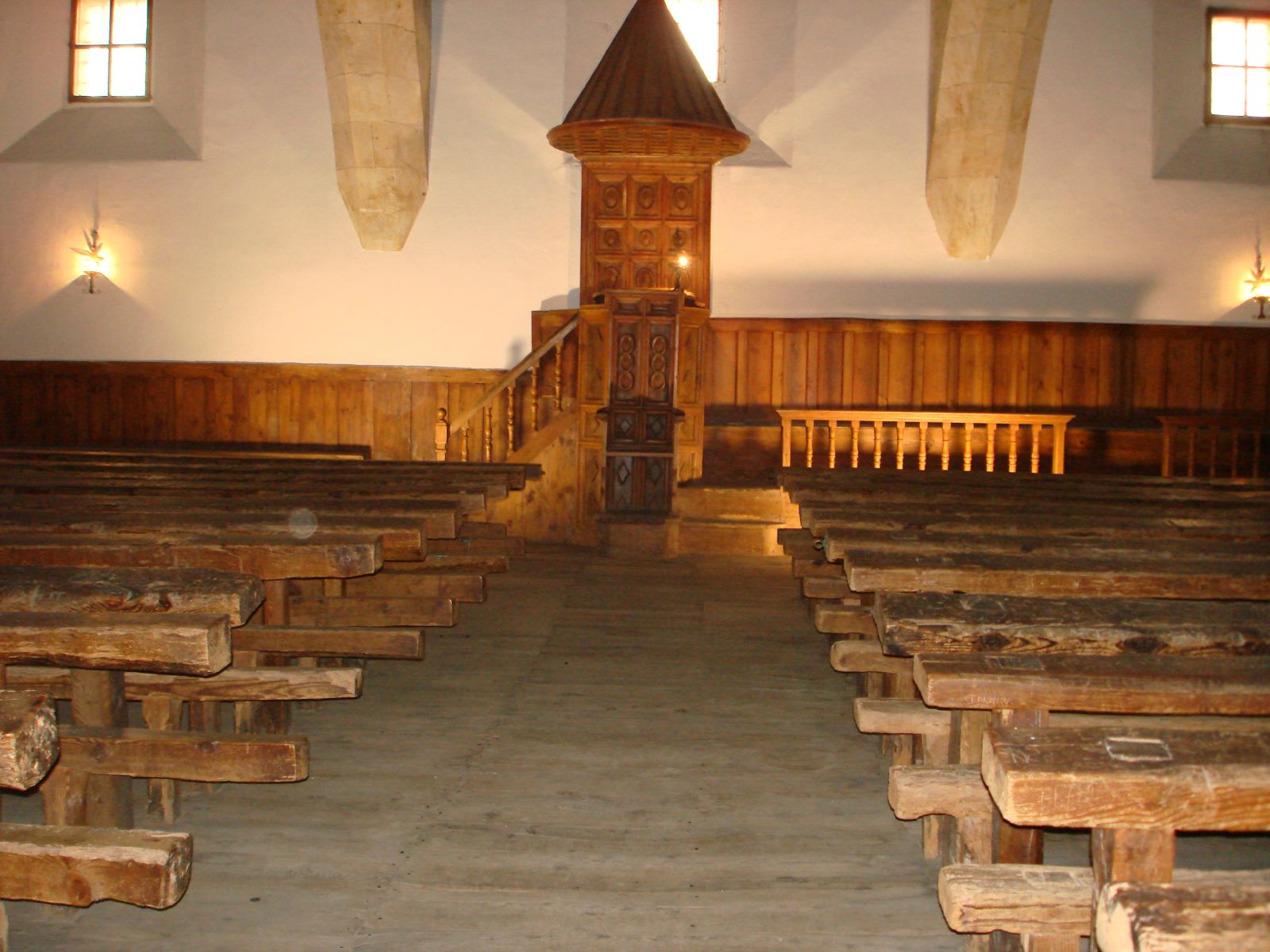
reason, it is touching to read about his visiting the hall in the University of Salamanca
Why should that be? Why should Fray Luis
occupy such a special place in Maugham’s heart? Well, there are a number of
reasons and they are all stated with clarity and precision. For one thing,
Maugham was quite smitten with the “liquid, elegantly balanced periods” of his
prose, and though he barely mentions Leon
To
me there seems something extraordinarily modern about Luis de Leon. He was not
all of a piece as so often appear the famous figures of the past. I do not
suppose men then were any different that what they are now, but it looks as
though to their contemporaries they seemed more homogenous. Otherwise they
could hardly have so often described them in terms of ‘humours’. But Fray Luis
was a contradictory creature in whom dwelt uneasily incongruous qualities and
warring instincts. […] He was vain and humble, impetuous and patient, sombre,
peevish, bitter, loyal and chivalrous. He loathed fools and hypocrites. He was
very tender to little children. He loved nature and truth. He was fearless. No
matter what enmities he aroused he was always prepared to denounce tyranny; he
would incur any danger to combat injustice. He was an ascetic, of great
abstemiousness, and he seldom allowed himself the luxury of going to bed, so that
the servitor who entered his cell in the morning found it as he had left it the
night before. But he loved the fair things of life, the lovely, lulling sound
of the Tormes flowing by La
Flecha, the heavenly music of blind Salinas and the
colour and cadence of the Spanish language. He was quarrelsome, rude, violent,
and he yearned above all else for peace. The cry for rest, rest from the
turmoil of his thought, rest from the torment of the world, recurs in all his
works. It gives his graceful lyrics a poignancy that pierces the artificiality
of their Horatian manner. He sought for happiness and tranquillity of spirit,
but his temperament made it impossible for him to achieve them. They count him
among the mystics. He never experienced the supernatural blessings which solace
those who pursue the mystic way. He never acquired that aloofness from the
things of the world that characterises them. He had an anxious longing for a
rapture his uneasy nature prevented him from ever enjoying. He was a mystic
only in so far as he was a poet. He looked at those snowcapped mountains and
yearned to explore their mysteries, but he was held back by the busy affairs of
the city.[38]
By way of a stark contrast, Maugham
finishes the penultimate chapter with a short account, mostly a florid
quotation from St Teresa’s autobiography, of St Peter of Alcantara. This is one
of the successful mystics, one of those fellows who elevated the mortification
of the flesh to new, unheard-of-before heights. And Maugham’s tone changes
immediately. There is a genuine admiration – “No wonder they were able to
conquer half the world, these Spaniards, when they could so terribly conquer
themselves.” – but there is nothing of the sympathy that shines on every line
in the pages dedicated to Fray Luis de Leon. The poetic friar never acquired
the prestigious “Saint” before his name, but his life is for my part – and
apparently Maugham’s, too – infinitely more compelling and worth studying. Indeed,
St Peter’s masochistic swimming through the “vale of tears”, a constant quest
for inflicting more and more misery on himself, is a far cry from the restless
but noble existence of Fray Luis, a man who restrained but never fully denied
the pleasures of the senses.
The book itself concludes with a long
paragraph that is probably Maugham’s finest tribute to the Spaniard of the Golden Age: the real treasure that this country has
produced. He roundly dismisses the Spanish art of the period as a mixture of
imitation and mediocrity, but hails the Spanish character as the mightiest
since the ancient Romans. The very last sentence contains something like a
twist in the end, an anti-climax perhaps, but I leave it to you to judge its
meaning. With this mighty paragraph, I can finish, too.
And
if I am not mistaken here is the secret of the greatness that was Spain Spain
Notes:
[1] Stories like “A Man from Glasgow ”
(Creatures of Circumstance,
Heinemann, Doubleday, 1947; early version “Told in the Inn of Algeciras”, The Woman at Home, February 1905) are
deliberately omitted from this list for the simple reason that Spain
[2]
In his study Maugham: A Reappraisal
(Barnes & Noble, 1987, pp. 61-62), John Whitehead went as far as suggesting
that all three “Spanish” stories from Creatures
of Circumstance – “The Point of Honour”, “The Romantic Young Lady” and “The
Mother” – were in essence written before the World War I and only revised for
their inclusion in the collection some 40 years later (see also note 25). So
far, however, only an early and slightly different version of “The Mother” has
been found. It first appeared in Storyteller
for April 1909 and it was reprinted in book form nearly 50 years later, The Cassell Miscellany, Cassell, 1958,
ed. Fred Urquhart. Interestingly, Mr Whitehead speculated about, but did not
confirm, early origins of “A Man from Glasgow
[3] The
Summing Up (1938), chapter 29, pp. 98-99 in
the Vintage Classics edition (2001).
[4] Ibid., chapter 28, pp. 95-98.
[5] Nash's
Magazine, October 1935. The Mixture
as Before, Heinemann, 1940. The
Complete Short Stories, Heinemann, 1951, vol. 3.
[6] See The
Summing Up (1938), chapters 18, 24, 51 and 65. At one place in chapter 51
the author casually mentions “the delight of those easy, monotonous and
exciting days in Heidelberg
[7] Ten Novels and Their Authors (1954),
published in the US
[8] Don
Fernando (1950), chapter 4, pp. 34-35 in Vintage Classics edition (2001).
[9] Ibid., chapter 6, p. 56.
[10] The Travel Books, Heinemann, 1955,
preface, p. xiii.
[11] See Don
Fernando (1950), chapter 4, p. 34 in the Vintage Classics edition (2001),
and The Summing Up (1938), chapter 9,
p. 24-25 in the Vintage Classics edition (2001).
[12] Don
Fernando (1950), chapter 9, pp. 141-142 in the Vintage Classics edition
(2001).
[13]
It should be noted that different editions print the word differently. Old hardbacks,
for example Mr. Maugham Himself
(Doubleday, 1954, ed. John Beecroft, p. 532) where the chapter is reprinted
under the title “El Greco: An Essay”, have just “sonnets”. But modern
paperbacks, for example the Vintage Classics edition from 2000, employ the very
different “Sonnets” (p. 141). The
latter style suggests that it is Shakespeare’s sonnets, particularly those that
address the fair youth of course, that are referred to, but whether this
formatting goes back to Maugham’s lifetime or was a later invention of naughty
publishers, it is hard to say.
[14] Don
Fernando (1950), chapter 9, p. 141 in the Vintage Classics edition (2001).
[15] The
Summing Up (1938), chapters 22 and 23. Note especially the last paragraphs
of both chapters.
[16] Don
Fernando (1950), chapter 9, p. 132 in
the Vintage Classics edition (2001).
[17] Ibid., p. 133.
[18] Ibid., pp. 150-151.
[19] Ibid., p. 152.
[20] Ibid., p. 136.
[21] Ibid., p. 149.
[22] A Writer’s Notebook (1949). The first
note in the “1897” section, p. 29 in the Vintage Classics edition (2001).
[23] Don
Fernando (1950), chapter 6, p. 53 in
the Vintage Classics edition (2001).
[24] Ibid., chapter 7, pp. 72-73 in Vintage
Classics edition (2001).
[25] Creatures of Circumstance (1947). First
published in Good Housekeeping, March
1947. Mr Whitehead has alluded to (Maugham:
A Reappraisal, Barnes & Noble, 1987, pp. 61-62) and even mentioned (A Traveller in Romance, Clarkson N.
Potter, 1984, ed. John Whitehead, p. viii) an early version of this story,
presumably from 1904, but nothing more is known of its existence. See also note
2.
[26] Don
Fernando (1950), chapter 7, p. 74-87 in the Vintage Classics edition
(2001).
[27] Ibid., chapter 6, p. 70.
[28] W. H. Auden, The Dyer’s Hand, Random House, 1962, pp. 246-272.
[29] Don
Fernando (1950), chapter 8, pp. 110-112 in the Vintage Classics edition
(2001).
[30] Ibid., p. 112.
[31] Ibid., p.106-108
[32] The
Summing Up (1938), chapter 67, pp. 256-257 in the Vintage Classics edition (2001).
[33] Don
Fernando (1950), chapter 10, p. 158 in the Vintage Classics edition (2001).
[34] Ibid., chapter 3, p. 34.
[35] Don
Fernando (1950), chapter 9, p. 123 in the Vintage Classics edition (2001),
and The Summing Up (1938), last
chapter, last sentence.
[36] The
Summing Up (1938), chapter 12, p. 35 in the Vintage Classics edition
(2001). The phrase is used about the dictum “the style is the man”.
[37] The
Vagrant Mood (1952), “Some Novelists I Have Known”, pp. 162-163 in the
Vintage Classics edition (2001).
[38] Don
Fernando (1950), chapter 10, pp. 163-164 in the Vintage Classics edition
(2001).
[39] Ibid., chapter 11, p. 178.